
Protecting Your Facility When Storms Hit After Hours
Storms in the Kansas City area do not wait for business hours. Hail, strong winds, and heavy rain often roll through late at night, when your staff is gone and your buildings are on their own. For commercial properties, that is exactly when a small roof issue can turn into a real emergency.
When a roof is damaged and no one responds, water can spread across ceilings, walls, equipment, and inventory. By morning, you might be dealing with interior damage, safety hazards, upset tenants, and operations slowed or stopped. Emergency roof repair is not just about the roof; it is about keeping your whole facility running.
The best way to stay in control is to build a clear, written after-hours storm roof emergency protocol. This plan sets your vendors, access rules, communication steps, and temporary repair limits before the sky turns dark. As a local exterior contractor in the Kansas City metro and Midwest, we work with commercial clients who want that plan in place before the next storm line shows up on the radar.
Building an On-Call Vendor Network Before the Storm
When the wind is howling and water is coming in, you do not want to start searching for phone numbers. Your vendors should already be vetted, set up, and ready to go. That starts with picking the right roofing partner and support team, then confirming they meet your compliance and performance requirements.
Key points for vendor prequalification include:
- Current licenses appropriate for your area and property type
- Proof of insurance that meets your company standards
- Experience with commercial roofs similar to yours
- A track record of safety on active job sites
- Clear 24/7 or after-hours response capability
Once the right vendors are identified, you also want agreed service level expectations, written down and shared with everyone involved. These expectations clarify what happens from the first call through closeout documentation.
That usually includes:
- Target response times after an after-hours call or alert
- Who the vendor calls first and backup contacts if there is no answer
- How they report from the field, for example photos, call, or email
- What documentation they provide after every emergency roof repair visit
If your company has several buildings across the KC metro or throughout the Midwest, it helps to avoid relying on only one provider. A layered approach gives you better coverage during widespread events when multiple properties may be impacted at the same time.
Set up:
- One primary roofing contractor that knows your portfolio
- A backup roofing contractor if the first one is at capacity during a major storm
- Specialty partners for solar systems, EV chargers, and other rooftop equipment when needed
This layered network means you can get someone on the roof quickly, even when storms hit many properties at once.
Access, Safety, and Site Controls After Hours
A great vendor cannot help you if they cannot get into the building or onto the roof. Access planning is simple to do in advance and very hard to fix at 2 a.m. in driving rain. The goal is to remove uncertainty so an on-call crew can arrive, enter, and get to the right area without delays.
Work out clear access steps, such as:
- Approved key boxes or badged digital access at main entry points
- Written instructions for roof hatches, stairwells, and elevators
- Check-in and check-out with security staff or remote monitoring teams
- A contact list for building or property management on-call staff
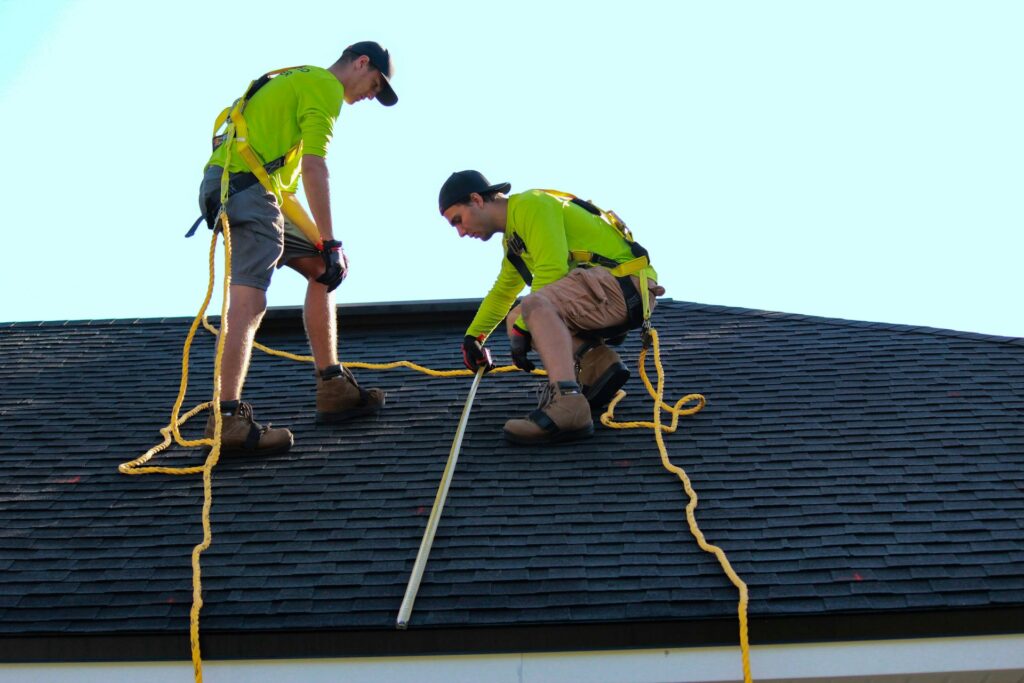
Safety is even more important at night and in low visibility. Your protocol should spell out that all work follows OSHA requirements, with special focus on the added risks that come with wet surfaces, debris, and changing weather conditions.
Include requirements such as:
- Fall protection on all roof edges and openings
- Weather go or no-go rules, such as lightning nearby or unsafe wind speeds
- Required lighting for work areas on dark roofs
- Safe foot paths on wet or debris-covered surfaces
Site control protects you, your tenants, and visitors. Even if work happens overnight, you can still set expectations that keep people away from hazards and reduce liability exposure while repairs are underway.
You can require:
- Marked emergency work zones on the ground and on the roof
- Barricades or caution tape around entry points and sidewalks under damaged areas
- Temporary signage at key doors and corridors
- Safety expectations and liability rules written into vendor agreements
With these controls in place, you reduce the chance of accidents while still getting fast emergency roof repair when you need it.
Pre-Authorizing a Clear Temporary Repair Scope
During an after-hours storm call, your roofing team should not be guessing what they are allowed to do. That slows down the response and can lead to confusion later. A strong protocol clearly defines the temporary repair scope you approve in advance, so the contractor can focus on stopping active leaks and preventing additional damage.
Start by listing what counts as a pre-approved temporary repair, for example:
- Tarping or covering damaged areas to keep water out
- Sealing small openings or seams to stop active leaks
- Installing temporary flashing or patching around penetrations
- Removing loose debris that might blow off and cause more damage
It is also helpful to spell out boundaries for work that requires owner or manager approval. Setting these limits up front prevents unauthorized changes and protects sensitive systems.
Examples include:
- Removing large sections of roofing
- Changing roof design or drainage paths
- Touching certain sensitive equipment or systems
To keep the work moving, set simple dollar and time guidelines. These guidelines help the contractor act quickly while giving you predictable controls over emergency spend and labor.
Consider including:
- A maximum spend per building for materials and labor without extra approval
- A limit on emergency labor hours per visit before the contractor must call for direction
- Approved material types for temporary use, such as specific tarps or sealants
All of this should be backed by strong documentation so you can support insurance claims, internal reporting, and long-term roof asset planning. Documentation also reduces disagreements later by showing what was found, what was done, and what still needs permanent correction.
Ask vendors to provide:
- Before and after photos of all work areas
- Notes on the type, location, and likely cause of damage
- Itemized invoices that separate emergency roof repair work from later permanent repairs
Integrating Roof Emergencies Into Business Continuity
Your roof emergency plan should not sit on its own. It should tie into your larger business continuity and disaster recovery work so the whole organization responds in a coordinated way. When roof leaks impact operations, the most effective response is the one that connects facilities, operations, IT, and communication in a single playbook.
Connect your roof protocol with:
- IT and server protection plans, especially if equipment rooms are near roof drains or upper floors
- Inventory and equipment protection, including how to cover or move high-value items under a leaking area
- Tenant and employee communication plans, so people know what is happening and what areas to avoid
A simple communication tree helps limit confusion and prevents missed calls in the middle of the night. By defining roles and escalation triggers in advance, you reduce delays and ensure the right people are involved at the right time.
Define:
- Who the on-call vendor notifies first when they find active damage
- When the facility manager loops in regional managers or risk management
- When tenants or occupants are notified and how, such as email, text, or posted notes
- What triggers higher-level escalation, like major structural damage or wide interior impact
After each storm event, do not just move on. Build in follow-up steps that convert the emergency response into permanent corrections and process improvements. This is where you confirm conditions are safe, close out documentation, and reduce the chances of repeat incidents.
Build in:
- Scheduled follow-up inspections once conditions are safe and dry
- A list of permanent repair items to address quickly
- A review of what worked and what did not work in the emergency response
This is also the right time to think about upgrades, such as more impact-resistant roofing materials, improved drainage, or better coordination between roof systems and rooftop solar or other equipment. Each upgrade can lower the odds that you will need another emergency roof repair the next time the radar lights up.
Putting Your Storm-Ready Roof Plan in Place Now
Spring storms across the Kansas City area and the wider Midwest come with very little warning. Waiting until you see shingles on the parking lot or water on the floor is a risky approach for any commercial facility. The most reliable approach is to do the planning when skies are clear, then rely on a written protocol when conditions are chaotic.
A practical next step checklist can help you move quickly:
- Prequalify and select primary and backup roofing vendors that handle after-hours calls
- Set clear access rules, key control, and check-in steps for nighttime entry
- Write down safety, site control, and documentation expectations in vendor agreements
- Define temporary repair limits, dollar caps, and labor hour thresholds in advance
- Connect the roof protocol to your broader business continuity and communication plans
- Share the finished protocol with facility teams, security, and vendors, and keep it updated
At Pro Roofing & Solar, we work with commercial property owners and managers across the KC metro and Midwest who want their buildings ready before the next storm hits. A thoughtful, written protocol gives you confidence that when the lights go out and the wind picks up, your roof emergency plan is already in motion.
Get Started With Your Project Today
When storm damage or sudden leaks put your building at risk, we are ready to respond quickly and protect your property. Learn how our emergency roof repair services can stabilize your roof and prevent costly interior damage. At Pro Roofing & Solar, we assess the situation, explain your options, and get to work with minimal disruption to your operations. If you need fast help or want to schedule an inspection, contact us today.