
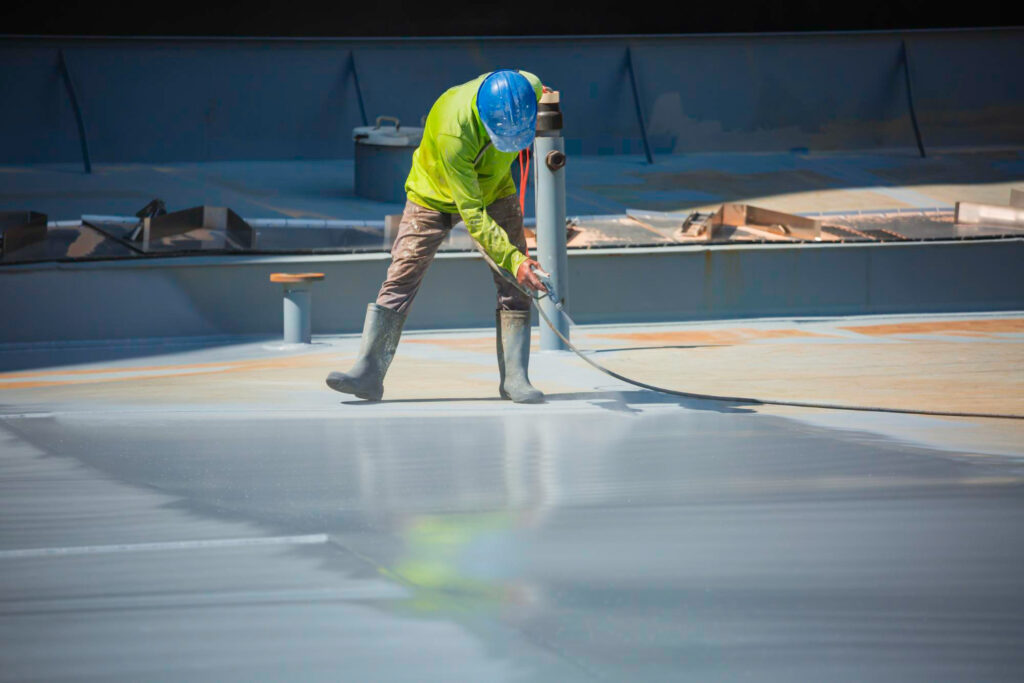
Extending Roof Life and Controlling Costs in Kansas City
Commercial and industrial roofs across Kansas City take a beating every year. Many facility managers are now turning to industrial roof coating and restoration instead of jumping straight to a full tear-off. Coatings can give an existing roof new life, seal trouble spots, and buy valuable time.
The big appeal is simple. Coatings help control budgets, limit downtime for tenants or production, and stretch the service life of the roof you already own. Rather than sending tons of old material to a landfill, you keep the structure in place and build a new protective layer on top.
Kansas City weather makes this even more important. Freeze-thaw cycles in winter, hail, high winds, heavy spring rains, and hot, sunny summers all add stress to commercial roofs. A well-designed coating system helps your facility shed water, handle temperature swings, and get ready for the storm season that often ramps up in late spring across the Midwest.
How Roof Coatings Perform on Kansas City Facilities
Commercial roof coatings are fluid-applied systems that cure into a seamless, waterproof membrane. Instead of seams, joints, and fasteners as weak spots, you get one continuous surface across the entire roof. That helps stop water from sneaking into tiny gaps where traditional materials meet.
On flat and low-slope roofs, that seamless layer can make a big difference. Coatings are designed to:
- Create a waterproof barrier over the existing roof surface
- Seal cracks, small splits, and minor punctures
- Wrap around penetrations like curbs, vents, and pipes
- Add a protective layer around rooftop equipment
Performance is not just about keeping water out. Many coating systems also improve how your roof handles sun and temperature. A reflective coating can reduce how hot the roof surface gets on sunny summer days. Lower roof temperatures can help reduce thermal movement, which is the constant expansion and contraction that leads to fatigue and wear in roofing materials.
In the Kansas City market, most facilities have one of a few common roof types. Coatings are often used on:
- TPO
- EPDM
- Modified bitumen
- Metal panels
- Built-up roofing systems
That said, compatibility is not automatic. The right product and process depend on what is already on the roof, how old it is, and how much moisture is trapped inside the system. A professional inspection is key before choosing any coating. That inspection should look at seams, flashings, drains, rooftop units, and any signs of hidden damage.
Comparing Commercial Roof Coating Options
Not all roof coatings are the same. Industrial roof coating and restoration projects usually rely on a few main chemistry types, each with strengths and trade-offs. The most common systems include acrylic, silicone, and polyurethane.
Here is a basic overview of where each tends to perform well:
- Acrylic: Popular for reflectivity and cost control, often used where ponding water is limited and white, reflective surfaces are a priority.
- Silicone: Known for strong resistance to ponding water, often selected for roofs with drainage challenges or areas that see standing water after storms.
- Polyurethane: Often chosen for impact resistance and toughness, helpful where hail, foot traffic, or equipment work can be hard on the roof.
When you compare these options, it helps to think about a few real-world Kansas City conditions:
- Ponding water resistance: Spring thunderstorms can dump a lot of rain fast. Roofs with low spots may need a system that holds up under standing water.
- Hail resilience: Some coatings handle impact and minor indentations better than others.
- Flexibility in freeze-thaw cycles: Coatings must flex with the roof when temperatures swing from below freezing at night to warmer afternoons.
- Reflectivity and energy performance: Light-colored coatings can help reduce heat gain in summer and ease pressure on your HVAC systems.
Warranty details are another major factor. Typical warranties vary in length and terms. Some are material-only, while others may include system or labor coverage when installed under specific guidelines. It is important to understand:
- How long the coverage lasts
- What types of leaks or failures are included
- Maintenance requirements to keep the warranty valid
- Any exclusions related to ponding water, abuse, or rooftop work by other trades
Working with an experienced Kansas City contractor that regularly installs coating systems can help set the project up for long-term performance. Proper prep, detail work around penetrations, and following manufacturer requirements all play a big role in how the system performs years down the road.
Deciding Between Restoration and Full Replacement
Not every roof is a good candidate for coating. Sometimes, a full replacement is the safer long-term move. The key is understanding what is happening under the surface.
Coating and restoration may be a fit when:
- The existing membrane is mostly intact, with limited wet areas
- Leaks are related to seams, flashings, or surface wear, not structural failure
- Insulation has not absorbed widespread moisture
- Decking is sound and not rusted through or rotted
Full replacement is more likely when there is deep damage, large areas of saturation, or ongoing structural issues. Before recommending either path, a solid evaluation should include tools like:
- Core samples to see how many layers are present and how wet the system is
- Infrared scans or moisture surveys to locate trapped water
- Detailed condition reports on flashings, drains, parapet walls, and roof edges
When comparing restoration to replacement, facility managers often look beyond the initial project. Life-cycle thinking is helpful. Restoration can reduce disruption to operations, shorten project timelines, and limit landfill waste, since most of the existing system stays in place. Permitting can sometimes be simpler for restoration as well, because the structural deck stays intact and fewer materials leave the site.
Those factors can make it easier to explain the plan to ownership and stakeholders. You can point to reduced downtime, lower material disposal, and a clear strategy to extend the service life of the existing roof system.
Timing Projects Around Midwest Weather
Planning is everything when you work on roofs in the Midwest. Late winter and early spring often make good planning windows for commercial roof projects in Kansas City. Crews can inspect, design the system, and schedule work before the most intense rain, hail, and heat arrive.
Coating systems have specific weather and temperature needs. For a successful application, your contractor will watch:
- Roof and air temperature ranges recommended by the manufacturer
- Dew point and humidity levels to avoid trapped moisture
- Surface dryness after washing or recent rain
- Cure times before expected storms or heavy foot traffic
Spring showers are part of life here, so timing around the forecast is important. Work might be staged in sections so that each area is cleaned, detailed, coated, and cured before moving on.
For facility leaders who manage multiple sites across the Midwest, phasing becomes even more important. You may want to:
- Prioritize roofs in the worst condition or with the biggest leak risk
- Coordinate coating work with HVAC upgrades, curb changes, or new rooftop units
- Plan around solar or EV charger projects so trades are not competing for space or damaging a new coating system
- Schedule work during lower occupancy periods when possible
Thoughtful phasing keeps businesses open, protects sensitive operations, and reduces the chance of rework caused by other trades cutting into a new roof surface.
Maximizing Value with a Strategic Roof Plan
Industrial roof coating and restoration works best when it is part of a long-term plan, not a one-time emergency fix. A strategic roof program tracks each building, its roof type, age, condition, and likely remaining life. With that information, you can schedule inspections and projects before leaks turn into major interior damage.
Coatings can also fit into a bigger picture for your exterior envelope. When you look at the building as a whole, it often makes sense to coordinate roof work with other upgrades like:
- Solar panel installations
- Insulation improvements
- Gutter and downspout upgrades
- New siding, windows, or exterior painting
By thinking about the roof along with these other systems, you can improve energy performance, protect the building shell, and support long-term property value. A clear plan helps you move from reactive patching to proactive management, which is where coatings really start to show their value for Kansas City and Midwest facilities.
Get Started With Your Project Today
If your facility’s roof is aging or starting to show wear, we can help you extend its life with our proven industrial roof coating and restoration services. At Pro Roofing & Solar, we assess your roof, explain your options in plain language, and recommend the solution that best fits your building and budget. Reach out today to schedule an inspection or request a detailed proposal, and our team will follow up quickly. If you are ready to talk through your project, simply contact us to get started.