
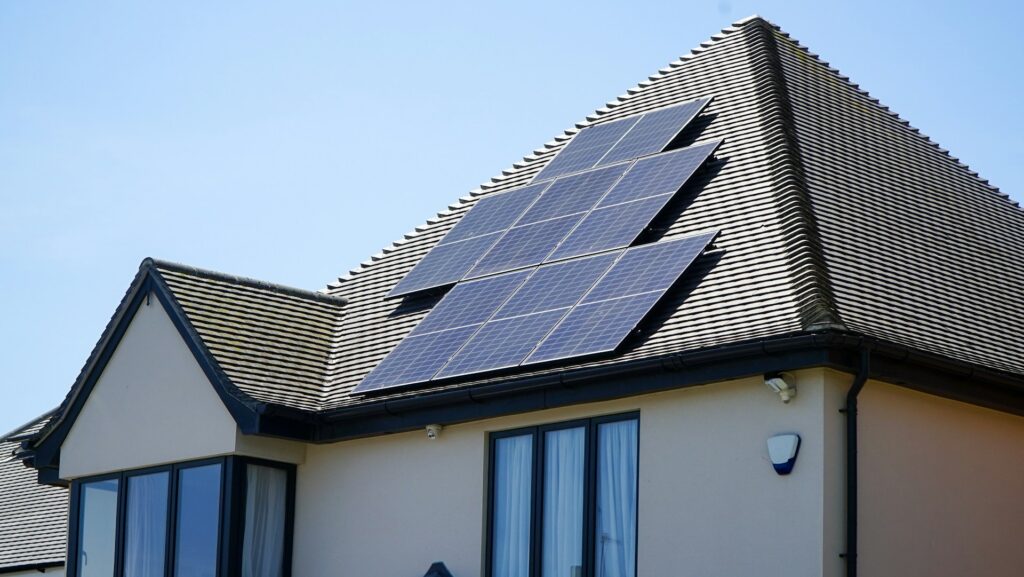
Unlocking Roof ROI Before You Add Solar
For property owners planning to add solar panels in the future but not ready to install them yet, the next roof project is an important opportunity to lay the groundwork for future energy savings. In Kansas City, the climate ranges from hot, humid summers to icy winters. As a result, the roof functions not only as a weather barrier but also as a major driver of heating and cooling costs for homes and buildings.
When considering energy-efficient roofing, it is useful to evaluate the roof as a complete system rather than as a series of isolated upgrades. Insulation, cool roofing materials, and solar-ready structural and electrical work all support each other. When these components are planned together, they can deliver compounding returns: lower utility bills, reduced risk of future repairs, and a more cost-effective path to adding solar later.
Roof-related investments can be viewed through a straightforward ROI framework. There are initial costs and benefits that accrue over time, including reduced energy use, extended roof life, fewer leaks and repairs, improved comfort, higher property value, and lower project complexity when adding solar panels and EV chargers in the future. The objective is to coordinate these elements during a reroof so that a single project achieves multiple performance and financial goals.
Building a Kansas City Roofing ROI Baseline
Before comparing options, it is helpful to establish what a typical Kansas City roof looks like. Many homes use asphalt shingles on a sloped roof with low to average attic insulation. Light commercial buildings often have low-slope membranes that absorb significant heat during summer. Common issues include ice dams along the eaves, overheated upper rooms, and damage from hail or strong winds.
For a basic ROI model, it is common to consider several baseline factors rather than precise values:
- Typical roof size for a home or small building
- Existing insulation level in the attic or roof assembly
- Local utility rates for electricity and natural gas or other heating fuels
- Heating and cooling loads driven by the regional climate
- Remaining service life of the existing roof without upgrades
Seasonality is also a key consideration. In Kansas City, cooling loads escalate quickly in late spring and remain high through summer. Winter brings freezing nights and temperature swings that stress roofing materials. Planning and bidding in spring can be advantageous: work can be completed before peak summer heat, and the property is positioned to realize performance benefits in both summer and winter.
Insulation Upgrades That Reduce Costs Immediately
When roofing is discussed, most people focus on shingles or membranes, but insulation and air sealing perform much of the essential work behind the scenes. In many homes, the most impactful improvements come from:
- Adding insulation to the attic floor
- Improving insulation at the roof deck in appropriate assemblies
- Air sealing around penetrations, top plates, and attic access points
Raising R-values to meet or exceed local code requirements can reduce both heating and cooling demand. Conditioned air is better contained, and roof heat gain is reduced, so the building maintains temperature more effectively. This typically leads to fewer operating hours for HVAC equipment and more stable indoor comfort throughout the year.
ROI for insulation upgrades can be evaluated by considering:
- Cost per square foot of added insulation and air sealing
- Estimated reduction in heating and cooling usage based on current conditions
- A general payback period, which is often shorter than for many other building upgrades
There are additional indirect benefits. Improved insulation reduces strain on HVAC equipment, supporting longer system life. Comfort typically improves, particularly in second stories and top-floor units. When solar is added in the future, more of the solar power can be used for productive loads rather than offsetting avoidable heat gain and loss. A tighter building envelope makes each kilowatt of solar generation more effective.
Cool Roofs and Reflective Shingles for Summer Performance
Cool roofs and reflective shingles are another important component of an energy-efficient roofing strategy in Kansas City. These materials are engineered to reflect more sunlight and absorb less heat. On low-slope commercial roofs, light-colored membranes can significantly lower roof surface temperatures compared with darker surfaces. On homes, reflective shingles help limit attic and upper-floor overheating.
ROI for cool roofs typically involves examining:
- The cost differential between reflective products and standard materials
- The reduction in cooling demand during sunny periods
- The potential for longer roof life, as lower surface temperatures reduce thermal expansion and UV-related degradation
The benefits are most pronounced during hot, humid summers when air conditioning demand is high. For large, sun-exposed roofs, especially low-slope or minimally shaded surfaces, the cooling savings can be meaningful. Cool roofing materials also complement other energy-efficiency measures. Combined with improved insulation, they can accelerate payback by lowering both conductive and radiant heat gain.
On commercial properties with substantial roof areas, the combination of cool roofing, insulation upgrades, and well-designed drainage and flashing can also reduce heat-related wear and recurring repairs. This can lead to fewer operational disruptions and a more predictable long-term cost profile.
Structural and Electrical Prework for Solar-Ready Roofs
Preparing a roof to be “solar-ready” focuses on the supporting structure and infrastructure rather than the panels themselves. When a roof is prepared in advance for future solar, typical steps include:
- Reviewing roof structure for load capacity
- Reinforcing framing where necessary
- Planning the panel layout to minimize vents and obstructions in optimal solar locations
- Pre-installing conduit paths and dedicated electrical circuits while the roof is accessible
Completing this work during a reroof is generally more efficient. The structure is already exposed, roofing crews are on site, and access is improved for electrical work. When solar installers begin work later, they can often complete the project with fewer roof penetrations, more direct wiring routes, and less uncertainty.
From an ROI standpoint, this represents a moderate additional investment during a reroof in exchange for multiple future benefits, including:
- Fewer change orders during the solar installation
- Shorter project timelines and reduced labor complexity
- Lower risk of disturbing the finished roofing system
This preparation can also streamline permitting and inspections, because the structural and electrical design of the roof is documented and coordinated in advance. For owners planning to install EV chargers, completing portions of the electrical groundwork while the roof is being replaced can further improve long-term readiness.
Comparing Payback Timelines for Roof Retrofit Bundles
When evaluating Kansas City properties, it is useful to compare several common upgrade bundles.
1. Insulation-only upgrades
- Typically the fastest route to energy savings
- Focused on comfort and reduced heating and cooling consumption
- Can produce significant performance gains without changing the visible roof surface
2. Cool roof-only upgrades
- Strongest impact on cooling costs in summer
- Helps protect roofing materials from heat and UV exposure
- Particularly beneficial on large, exposed roof areas
3. Combined package with solar-ready prework
- Integrates insulation and cool materials for layered energy savings
- Adds structural and electrical planning for future solar and EV infrastructure
- May not provide the fastest short-term payback, but can improve long-term returns once solar is installed
In the near term, typically the first one to five years, insulation and cool roofs usually deliver most of the direct financial benefit. Over a medium time frame, extended roof life and fewer repairs begin to play a larger role. Over the long term, a solar-ready roof can reduce the overall cost and complexity of adding solar and EV charging, because a significant portion of the prerequisite work is already complete.
The optimal approach depends on ownership horizon and objectives. For owners who expect to sell within a few years, visible improvements and immediate comfort gains may be the priority. For long-term owners planning to add solar, a bundled energy-efficient roofing strategy often provides stronger overall value. These improvements can also align with existing or future utility rebates and incentive programs tied to energy performance and electrification.
Positioning Your Next Roof Project as an Energy Asset
When hail, storm damage, or age necessitate a new roof, it can be tempting to opt for a straightforward like-for-like replacement. However, a roof can function as more than a protective surface. With a structured plan, it can operate as an energy asset that supports lower utility costs, enhanced comfort, and a smoother path to solar and EV infrastructure in the future.
By evaluating the roof, attic, structure, and electrical systems as an integrated whole, property owners can develop a practical ROI model tailored to the specific building and long-term goals. This coordinated approach reduces guesswork, helps prioritize upgrades, and turns a required roofing project into a strategic investment in energy performance and resilience.
Get Started With Your Project Today
If you are ready to lower utility bills and improve comfort, our team can help you choose the right energy-efficient roofing solution for your home. At Pro Roofing & Solar, we evaluate your current roof, walk you through materials and options, and explain the long-term savings clearly. We handle the entire process from inspection to installation so you can feel confident in every step. Have questions or want to schedule an appointment? Just contact us and we will follow up promptly.